
Philosophy we follow
The 5A Principles for Living Climate Receptacle
Awareness
Agency
Action
Adaptation
Accountability
The 5A Actor Framework (People)
Activists
Administrators
Academicians
Artists
Amplifiers
Together: Principles + People
The 5As are our compass, and the 5A Actors are our carriers. Principles without people remain abstract; people without principles risk fragmentation. United, they form a living Climate Receptacle —anchoring climate justice in knowledge, governance, creativity, and communication, while ensuring it is felt, lived, and remembered.
Methodology: Routes through ROOTS
The methodology of Routes through ROOTS recovers and validates indigenous practices as pathways to resilience. It maps cultural memory, oral traditions, tribal art, and ecological wisdom, critically learning from practices that sustained communities in harmony with nature. This approach challenges technocratic dominance by embedding climate action in lived experience. It ensures adaptation strategies are co-produced with communities, drawing strength from their roots while opening routes to innovation. Routes through ROOTS thus becomes a counter hegemonic exercise, bridging micro narratives with structural challenges, and making climate governance culturally resonant and socially sustainable.
Innovative Interventions we are Operationalising
Conference of Panchayats (Raigad)
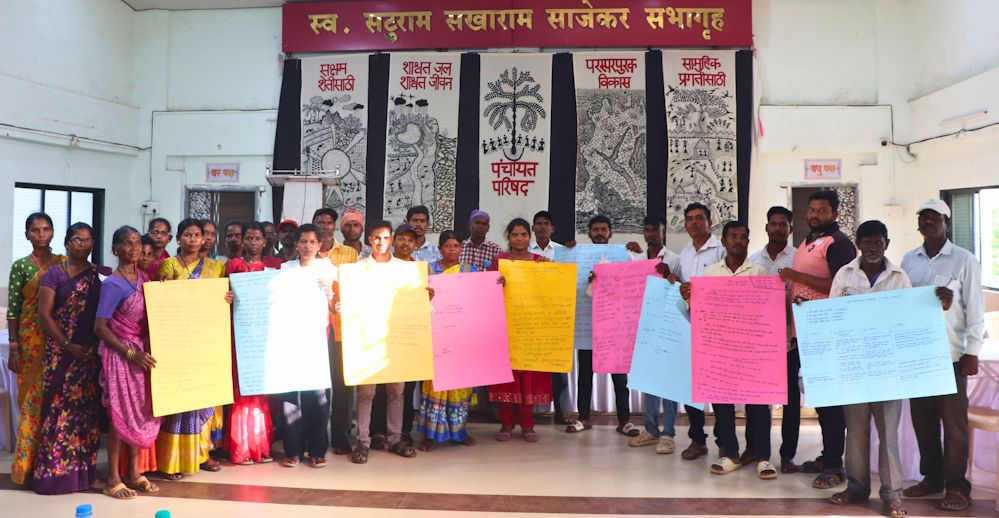
The Raigad Conference of Panchayats (CoP R) is a landmark in participatory climate governance. Moving beyond dialogue, it activates deliberative democracy at the block level, embedding climate action into local governance structures. Panchayats are positioned not as implementers but as co‑architects of solutions, reclaiming agency through subsidiarity. By convening Gram Panchayats, documenting indigenous practices, and co‑designing replicable programs, CoP R transforms local institutions into laboratories of democratic innovation. It ensures that climate resilience is not imposed from above but co‑produced with communities, weaving justice, sustainability, and everyday governance into one collective framework.
Localisation of SDGs
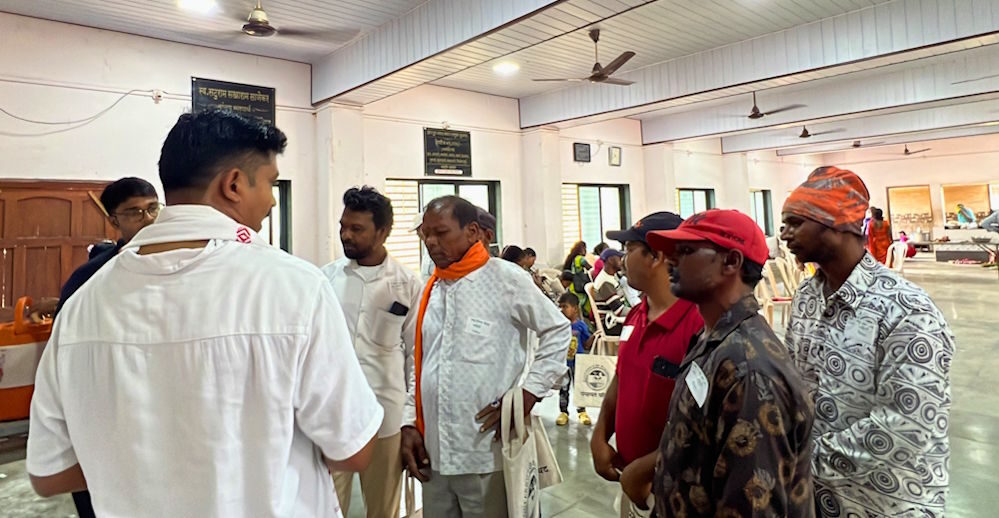
CoP R reframes global goals through local aspirations, embedding SDGs into block‑level climate action plans. SDG 2 (Zero Hunger) is advanced through agroecology and seed conservation; SDG 4 (Quality Education) through climate literacy; SDG 5 (Gender Equality) by ensuring women’s leadership; SDG 6 (Clean Water) through community‑led water management; SDG 11 (Sustainable Cities) by addressing peri‑urban transitions; SDG 13 (Climate Action) through adaptation and mitigation; and SDG 15 (Life on Land) by reviving forest stewardship. By localising SDGs, CoP R transforms them into community‑owned interventions, ensuring resilience is participatory, just, and replicable.
Shedashi:
Localising SDGs into Climate Action
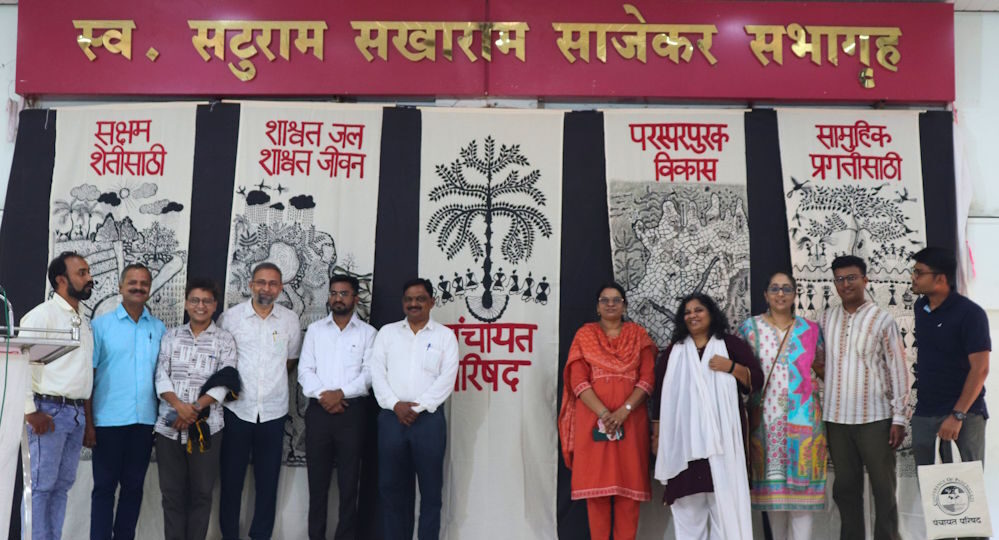
Shedashi Gram Panchayat in Raigad has become a pioneering site for localising the Sustainable Development Goals (SDGs) into grassroots planning. Selected for its socio‑economic profile and climate vulnerabilities, Shedashi embraced a participatory process that began with orientation meetings and the formation of a Village Development Committee (VDC), ratified by the Gram Sabha. Through training, participatory rural appraisal, and micro‑level planning, villagers — including Katkari tribal communities, women’s groups, and youth — co‑designed solutions addressing water scarcity, education, gender equity, and climate resilience. These locally generated plans were integrated into the official Gram Panchayat Development Plan (GPDP), making Shedashi one of the first Panchayats in Raigad to adopt an SDG‑aligned, climate‑sensitive plan. The process yielded institutional innovation, social empowerment, and developmental outcomes, including a local climate plan and a demand‑driven development matrix. Shedashi now stands as a replicable model of community‑driven, gender‑inclusive climate governance.
Epistemologies of the Everyday:
Reframing Data through Living Practices
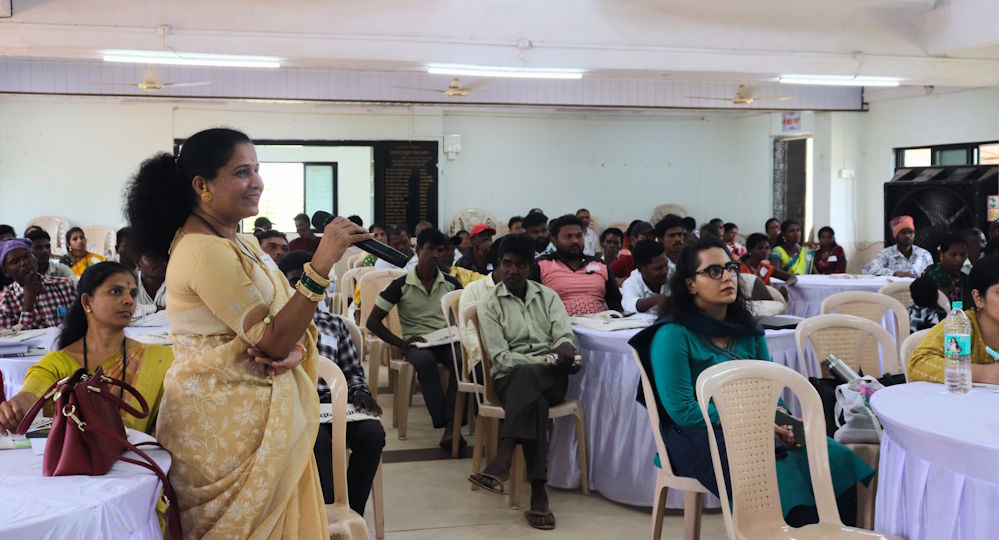
Our intervention recognizes living practices—rituals, art, everyday acts—as community expressions that generate situated knowledge. What is often dismissed as anecdote becomes data, offering new understandings of vulnerability and resilience. By redefining data, we reformulate methodology and reframe epistemology, moving beyond extractive surveys to embodied narratives. This approach reimagines the marginalized not as subjects but as positional actors in climate discourse, whose lifeworlds shape planning and justice. It is an innovative intervention where knowledge is lived, data is felt, and resilience is co‑authored by communities themselves.